
A global problem with local impacts
The Esposito report highlights that climate changes are occurring faster than predicted and that some of the critical thresholds for Earth system stability may have already been exceeded.
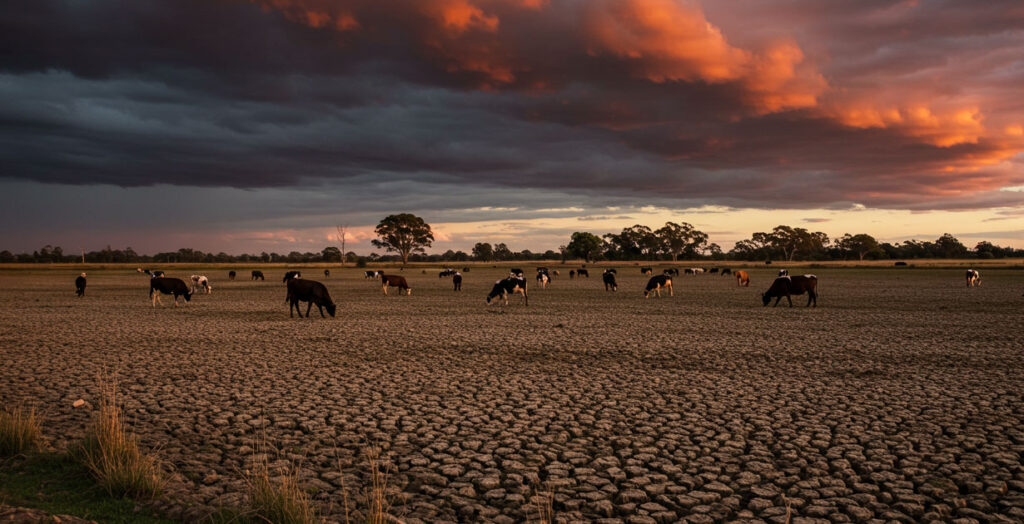
In particular, the report warns of the increase in extreme events such as heat waves, prolonged droughts and intense rainfall, which have direct consequences in Uruguay.
The document highlights the country’s vulnerability due to its dependence on climate-sensitive activities such as agricultural production, hydropower generation and water resource management.
At the same time, it emphasizes the need to strengthen adaptive capacity to minimize risks and ensure the resilience of Uruguayan society.
The role of methane and livestock
One of the central points of the article is the impact of greenhouse gases, in particular methane, largely from enteric fermentation of livestock.
Spósito points out that, although Uruguay has made progress in the energy transition with a matrix based on renewable sources, the reduction of emissions from the agricultural sector remains a key challenge to meet the commitments made in the Paris Agreement.
The document presents strategies and recent studies that explore solutions such as new soil management practices, the use of additives in livestock feed and the incorporation of forage species with the capacity to reduce methane emissions.
Particularly noteworthy is the use of red algae of the genus Asparagopsis, which has been shown to significantly reduce methane production in ruminants.
Climate projections for Uruguay
According to the scenarios analyzed by the IPCC and other sources, Uruguay could experience an annual average temperature increase of between 1.2 °C and 1.9 °C by 2040 and up to 5.5 °C by 2100 in the high emissions scenarios.
In addition, changes in the precipitation regime are projected, with a 30% increase in autumn and an increase in the intensity of extreme rainfall events towards the end of the century.
Towards sustainable adaptation
Spósito argues that responses to climate change cannot be limited to traditional technical or economic approaches.
It proposes integrating the Systems Thinking paradigm to address the problem holistically, considering the interconnections between natural and human systems.
Among the adaptation strategies for Uruguay, the document highlights:
- Improved management of water resources to cope with droughts and floods, including the use of blue-green infrastructure.
- The promotion of sustainable and climate-resilient agricultural practices, including land suitability analysis (LSA) to identify the best areas for cultivation in the face of climate change.
- Urban planning with green infrastructure to reduce the impact of heat islands and optimize water use.
About the author
Eng. Víctor Spósito Acquistapace is a Civil Engineer from Universidad de la República, MPhil in Regional Planning and Urban Design (University of Edinburgh) and MSc in Civil Engineering (University of Texas).
He has held strategic positions in the government of Victoria, Australia, and has been instrumental in the signing of academic agreements between Uruguayan universities and Deakin University.

